
Qatar after the 2022 World Cup: what became of the housing market and the infrastructure built for it
For the World Cup, Qatar built a metro, stadiums and entire districts. What still works for the housing market today, where oversupply was left behind, and why the country opened freehold just before the tournament.
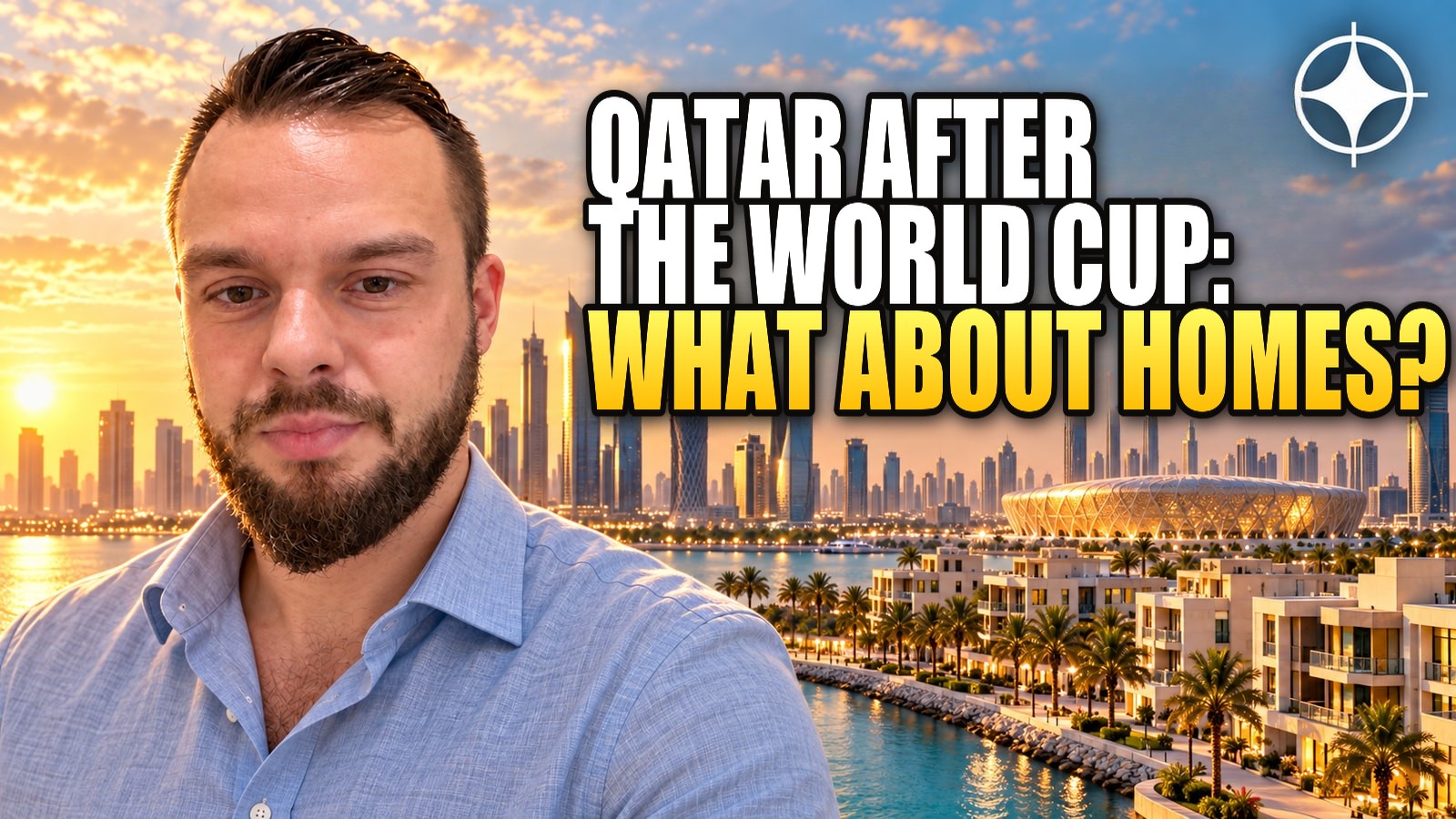
For Qatar the 2022 World Cup was less a sporting event than a reason to rebuild the country over a decade. The Doha Metro, motorways, the new city of Lusail, the airport, the hotel stock — all of it appeared for the tournament. The question investors ask is a simple one: which of it keeps working now the fans have gone home?
What remains and works
- The Doha Metro — three lines linking the airport, the business district, the university cluster and Lusail. For the housing market this is the main legacy: in a city where everyone drove, access to public transport became a price factor for the first time rather than an irrelevance.
- Lusail — not a stadium but a city for more than 200 000 residents, with its own business district, waterfront and marina. It is filling up gradually, and it is where most new supply for foreign buyers is today.
- The hotel stock — built for peak demand, it was left oversized and is being repositioned towards business travel and conferences.
Why freehold was opened when it was
The list of zones where foreigners can own property was widened in the run-up to the tournament, and that was no coincidence. A country that had poured enormous sums into housing and hotels needed demand that would not end with the event. Opening freehold in nine zones and a 99-year usufruct right in sixteen more, plus linking a residence visa to a purchase, is precisely the mechanism for turning a one-off construction boom into a permanent market.
Where the oversupply is
The legacy of major tournaments looks the same in every country: facilities built for peak attendance turn out larger than needed once the event is over. In Qatar that means, above all, hotel and serviced-apartment complexes geared to short stays, as well as some of the housing in districts whose occupancy depends on how quickly offices move in. Lusail is a long-horizon project in that sense: its economics will be decided not by tenants but by how many companies eventually relocate there.
Talk to a licensed broker: 📲 +971 50 120 32 64 on WhatsApp, @dubai_oleg on Telegram
How an investor should read this
- The infrastructure is a real argument, not a marketing one. The metro and roads are built and running, and they genuinely change the value of specific addresses.
- The oversupply is real too. It caps rent growth in the segments where the most space was added.
- The horizon is longer than Dubai's. Lusail will take years to fill, and buying there is a bet on businesses moving in, not on current rental income.
- Compare against a specific goal, not against Dubai as a whole. If you want residency and a presence in the Gulf at calmer prices, Qatar answers that. If you need liquidity, it does not.
Based on Qatar's official development programmes, public data on infrastructure projects for the 2022 tournament and industry reviews of the Doha property market.
In the news
Other write-ups on the site about the same thing.

Lusail and The Pearl: how the Doha property market works
The law opened twenty-five zones to foreigners, but real liquidity and real turnover are concentrated in two of them. That is not a shortage of choice but a consequence of structure.

Qatar or Dubai: two Gulf property markets compared for a foreign buyer
Where a foreigner can buy more easily, sell faster, see clearer data and get residency for less. Qatar and Dubai compared on the seven points where they genuinely differ.

Renting in Doha: who rents, what they pay, and why the market rests on expats
The easiest way into the Doha rental market is one figure: the overwhelming majority of Qatar’s population are foreigners who came to work. Demand is employment-driven, not domestic.
Dubai property transactions in September 2026: DLD records 11,430 sales worth AED 29.7bn, the first monthly rise since summer
September 2026: 11,430 sales worth AED 29.66bn, about 44% fewer than a year earlier but 9.9% higher than August by value. Ready homes took 54% of the money, off-plan 65% of the deals. Nine-month sales reached AED 379.4bn.
Dubai rents in Q2 2026: down 6.2% in a quarter as supply arrives — CBRE review
CBRE reports average Dubai residential rents fell 6.2% quarter on quarter and 2.6% year on year in Q2 2026. Sale prices stayed 1.9% above last year while transaction volumes dropped 29%. Office rents rose 13%.

Business Bay overtakes Palm Jumeirah in prime deals in August 2026, even as Dubai's wider market cools
Business Bay recorded 14 prime transactions in August 2026 against Palm Jumeirah's 10 — while Dubai-wide transaction volume fell 37% year-on-year and value fell 44%. Rental search demand rose 44% over the same period. What these seemingly contradictory numbers actually mean.